
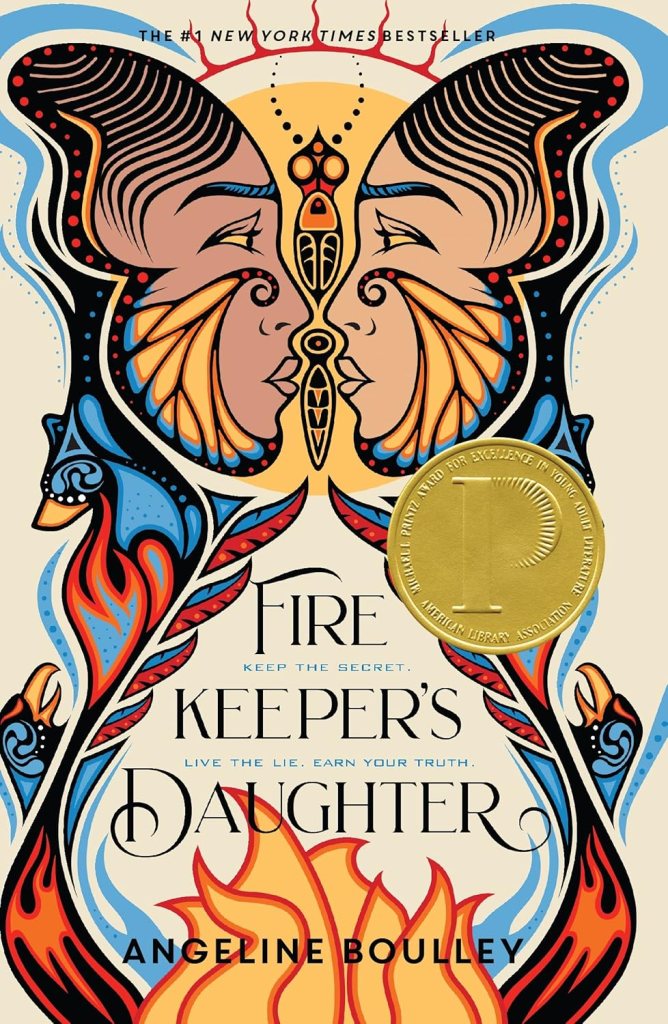
Angeline Boulley’s debut novel Firekeeper’s Daughter is dense, beautifully written, and methodically structured. Boulley takes her time building the world of the story, plotting through all the complicated nuances of Daunis’ back story with her white and Native families and communities.
The synopsis:
Eighteen-year-old Daunis Fontaine has never quite fit in, both in her hometown and on the nearby Ojibwe reservation. She dreams of a fresh start at college, but when family tragedy strikes, Daunis puts her future on hold to look after her fragile mother. The only bright spot is meeting Jamie, the charming new recruit on her brother Levi’s hockey team.
Yet even as Daunis falls for Jamie, she senses the dashing hockey star is hiding something. Everything comes to light when Daunis witnesses a shocking murder, thrusting her into an FBI investigation of a lethal new drug.
Reluctantly, Daunis agrees to go undercover, drawing on her knowledge of chemistry and Ojibwe traditional medicine to track down the source. But the search for truth is more complicated than Daunis imagined, exposing secrets and old scars. At the same time, she grows concerned with an investigation that seems more focused on punishing the offenders than protecting the victims.
Now, as the deceptions―and deaths―keep growing, Daunis must learn what it means to be a strong Anishinaabe kwe (Ojibwe woman) and how far she’ll go for her community, even if it tears apart the only world she’s ever known.
Though the book’s pace can sometimes feel slow, it’s not just the world that Boulley is building but the tension and emotional investment, as well. There are dozens of characters in Firekeeper’s Daughter, but each has a place, and the careful structure means the reader can understand their importance and why we should care about what is happening (and to whom).
Boulley’s seamless integration of the Ojibwe language into the text creates an immersive reading experience, further enhanced when listening to the audiobook. Isabella Star LaBlanc’s interpretation of Daunis is open and empathetic, allowing listeners to easily connect with all of Daunis’ emotions, making her character feel authentic and relatable.
If I have one hesitation about this beautiful book, it sometimes feels bloated. Boulley tackles so many issues in Firekeeper’s Daughter. While they are each an important reality to many Native people and in many Native tribes, it feels impossible to cover every single issue with due diligence. It also might risk one issue distracting or detracting from another. As a whole, though, Firekeeper’s Daughter is a powerful and impressive book.
 BOOK:30